Our services
We offer an extensive range of services, from installation and upgrades to maintenance and emergency repairs. Safety is our number one priority. We work safely and strive to create a safe environment for every client. We never cut corners or take shortcuts. Your satisfaction is our only priority.
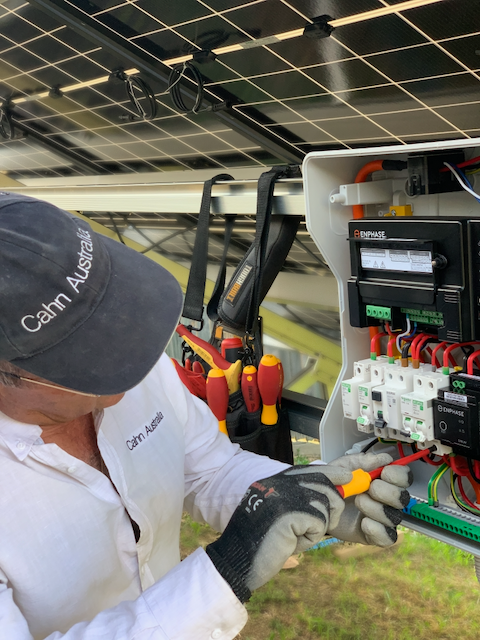
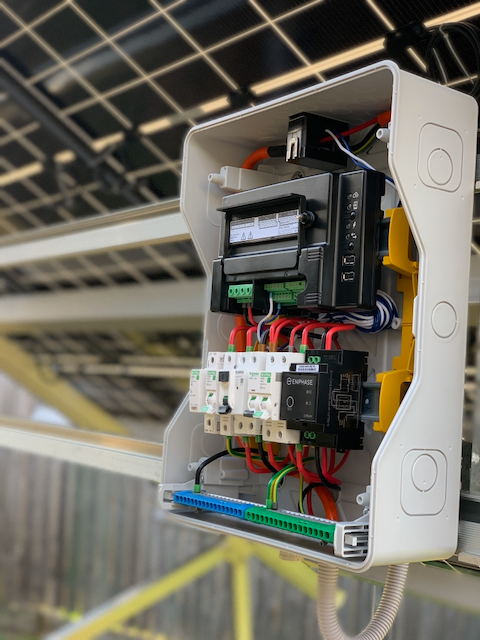
Grid connected PV
GCPV (Grid-Connected Photovoltaic) Systems are solar power architectures that operate in parallel with the local utility grid. They generate electricity for on-site consumption and export any surplus power back to the grid.
Here is a concise breakdown of the complete GCPV lifecycle:
- Design: Engineering the system to match site-specific load profiles and roof structures. This involves calculating energy yields, selecting compatible components (panels, inverters, cabling), optimizing string configurations, and ensuring strict compliance with local grid connection rules and electrical standards (such as AS/NZS 5033 and AS/NZS 4777.1 in Australia).
- Installation: The physical execution of the design. This includes securely mounting the solar arrays, routing DC/AC wiring, installing the Power Conversion Equipment (inverters/microinverters), integrating smart meters, and performing low-voltage safety testing before final grid commissioning.
- Maintenance: Ongoing technical support to ensure the system operates at peak efficiency. This involves remote performance monitoring, thermal imaging of panels, physical cleaning, verifying meter seals and electrical connections, and diagnosing complex system faults.
- Upgrade: Expanding or modernizing an existing GCPV system to meet increased energy demands or integrate new technology. Common upgrades include adding a Battery Energy Storage System (BESS) for load shifting, swapping string inverters for microinverters, or installing automated energy management software.
01
Grid Connected Battery Systems
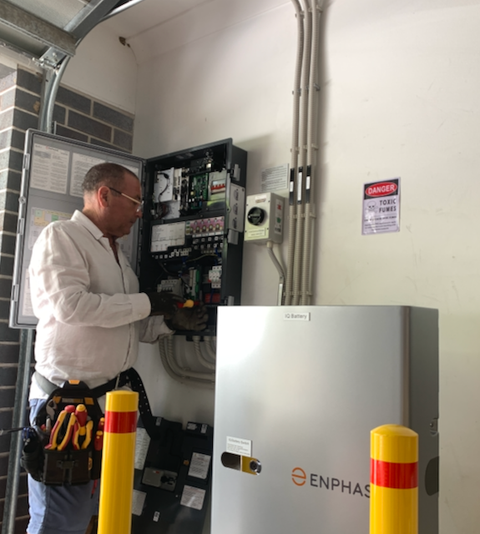
GCBS (Grid-Connected Battery Systems) are energy storage architectures that integrate with the utility grid—and typically a solar PV system—to store surplus electricity. They enable users to maximize solar self-consumption, shift loads away from peak tariff periods, and often provide critical backup power during grid outages.
Here is a concise breakdown of the complete GCBS lifecycle:
- Design: Calculating the required storage capacity and continuous power output based on a site's load profile. This phase involves selecting the appropriate battery chemistry and coupling architecture (AC vs. DC coupled), planning for thermal management, and engineering the system to meet strict battery safety and grid regulations (such as AS/NZS 5139).
- Installation: The physical placement and electrical integration of the battery unit. This requires adhering to specific fire-safety clearances, installing the battery inverter and necessary isolation switches, wiring essential backup circuits, and configuring anti-islanding protection to ensure safe operation alongside the grid.
- Maintenance: Ongoing management to preserve the battery's State of Health (SoH) and operational safety. This includes pushing essential firmware updates, actively monitoring charge/discharge cycles and cell degradation, testing backup changeover switches, and inspecting physical enclosures and ventilation paths.
- Upgrade: Enhancing the system to meet growing energy demands or leverage new market opportunities. Common upgrades involve scaling up capacity by adding modular battery blocks, updating software to participate in Virtual Power Plants (VPPs), or integrating dynamic energy management systems to capitalize on wholesale tariff arbitrage.
02
Stand Alone Power Supply
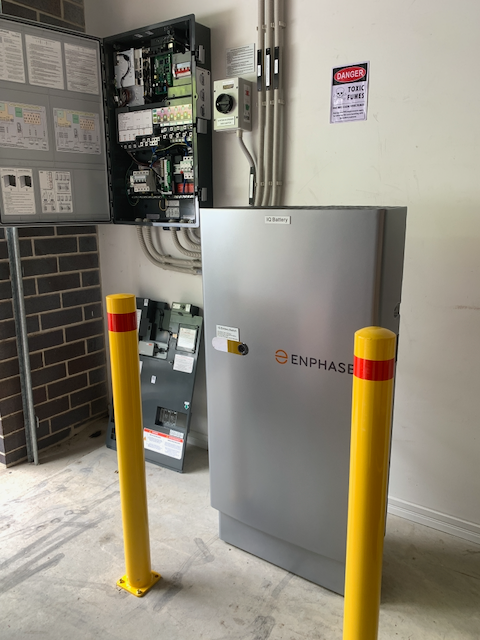
SPS (Stand-Alone Power Systems), commonly known as off-grid systems, operate entirely independently of the utility grid. They utilize a carefully engineered combination of renewable generation, high-capacity energy storage, and backup generation to provide reliable, 24/7 power to isolated locations.
Here is a concise breakdown of the complete SPS lifecycle:
- Design: Meticulously calculating total daily energy consumption, peak surge loads, and required "days of autonomy" (sustained battery power during poor weather). This ensures the solar array, battery bank, heavy-duty inverters, and backup generator are perfectly sized for absolute energy independence.
- Installation: Constructing the isolated microgrid. This includes mounting the solar assets, building climate-controlled and fire-rated battery enclosures, wiring the core AC/DC conversion equipment, and integrating an auto-start backup generator for seamless failover.
- Maintenance: Proactive, ongoing servicing that is critical for uninterrupted power. This involves routine mechanical maintenance of the generator (fluids and filters), closely monitoring battery State of Health (SoH), and inspecting high-current DC connections.
- Upgrade: Expanding the system's generation or storage capacity to support growing energy needs (e.g., adding air conditioning or new outbuildings). Upgrades typically involve adding modular battery blocks, increasing solar array size, or retrofitting legacy systems with modern lithium battery architectures.
03
Performance Energy Systems Inspections
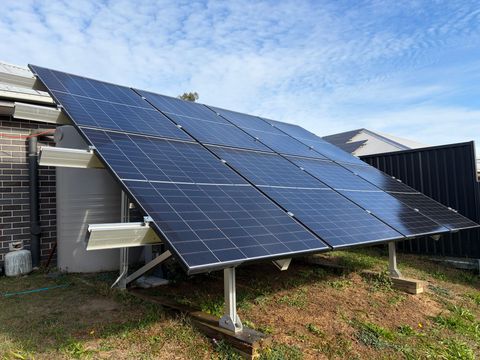
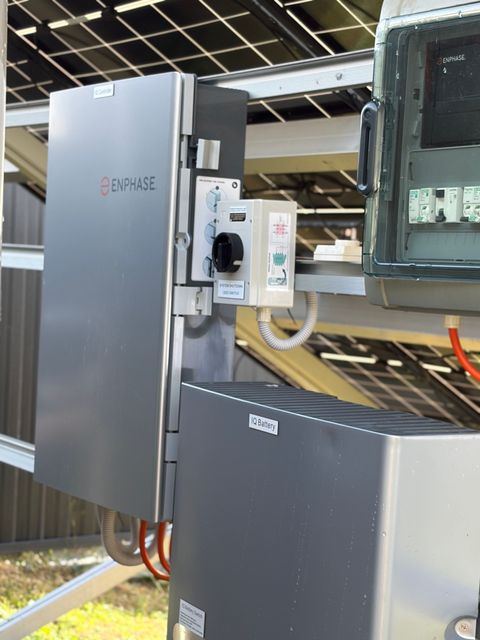
PESI (Performance Energy Systems Inspection) is a comprehensive technical audit and regulatory assessment of installed renewable energy assets, such as Solar PV and Battery Energy Storage Systems (BESS). Conducted by qualified professionals—such as Clean Energy Regulator (CER) Authorised Inspectors—a PESI ensures that a system operates safely, efficiently, and in strict adherence to national electrical standards.
Here is a concise breakdown of the core phases of a Performance Energy Systems Inspection:
- Compliance & Safety Audit: A rigorous physical and electrical examination to verify the system meets current installation standards (such as AS/NZS 5033 and AS/NZS 5139). This includes inspecting DC/AC wiring, isolation switches, earthing systems, fire clearances, and meter seals.
- Performance Verification: Analysing real-time output data, historical inverter logs, and site load profiles to confirm the system is achieving its designed energy yield. This phase identifies any underlying degradation, shading issues, or sub-optimal tariff configurations.
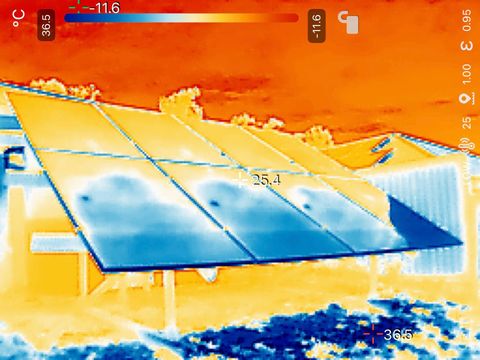
- Diagnostic Testing: Conducting specialized on-site testing, including thermal imaging of solar arrays and switchgear to detect dangerous hot spots, alongside low-voltage safety checks and insulation resistance testing.
- Reporting & Certification: Utilizing digital auditing platforms to compile a detailed, evidence-based health report. This provides the system owner with official compliance documentation, defect logging, and actionable recommendations for maintenance, rectification, or optimization.
04
Regulatory Energy Systems Inspections
RESI (Regulatory Energy System Inspection) is an official, compliance-driven audit of renewable energy installations, mandated by government or industry bodies. Conducted by appointed authorities—such as Clean Energy Regulator (CER) Authorised Inspectors—a RESI ensures that a solar PV or battery system strictly adheres to national laws, safety standards, and environmental certificate eligibility requirements.
Here is a concise breakdown of the core phases of a Regulatory Energy System Inspection:
- Scheme Eligibility Verification: Confirming that all installed equipment (panels, inverters, batteries) is officially approved and matches the submitted documentation. This step is critical for validating government incentives, such as Small-scale Technology Certificates (STCs).
- Statutory Safety Auditing: A strict physical examination of the system against mandatory national electrical and fire safety standards (such as AS/NZS 3000, AS/NZS 5033, and AS/NZS 5139). This ensures the installation poses no hazard to the property, the public, or the utility grid.
- Workmanship & Documentation Review: Cross-referencing the physical installation with schematics and single-line diagrams. This includes verifying that all mandatory warning signage, correct cable sizing, isolation switches, and meter seals are properly implemented by a licensed installer.
- Official Reporting & Enforcement: Utilising standardised digital auditing tools to log evidence and submit formal inspection outcomes. This results in either a certificate of compliance clearing the system, or the issuance of a defect notice requiring mandatory rectification by the original installer.
05
Commercial & Residential Energy Efficiency
RCEE (Residential & Commercial Energy Efficiency) focuses on optimising how power is consumed within a property. Rather than just generating or storing electricity, RCEE strategies aim to reduce overall demand, automate load shifting, and eliminate waste to maximise financial returns and sustainability.
Here is a concise breakdown of the complete RCEE lifecycle:
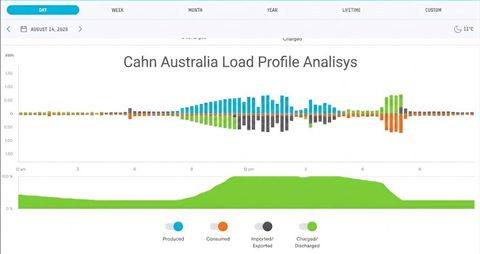
- Energy Auditing & Profiling: A comprehensive analysis of a site’s current power consumption patterns. This involves reviewing interval meter data, identifying inefficient appliances or "phantom loads," and pinpointing exactly when and where energy is being wasted.
- Design & Strategy: Developing a tailored energy reduction and automation plan. This includes specifying high-efficiency hardware upgrades, designing smart load-control circuits, and recommending optimal retail electricity tariffs to match the user's consumption habits.
- Implementation: The physical deployment of energy-saving technology. This ranges from retrofitting LED lighting and upgrading HVAC controls to installing smart home/building automation systems that dynamically turn on heavy loads (like pool pumps or hot water systems) only when surplus solar energy is available.
- Monitoring & Optimization: Ongoing tracking of energy flow using smart metering and analytics platforms. This allows system owners to actively monitor their consumption in real-time, continuously fine-tune automated load shifting, and verify that projected financial savings are being achieved.
06
We get it done
Every project comes with its own needs and challenges. Tell us your priorities, and we'll fill them to your satisfaction.
Have an emergency?
In an emergency, every second counts. We provide prompt, affordable emergency services—just one call away.